Food Culture
Behind 자갈치시장(Jagalchi Sijang): the story of 선지국밥거리(Seonji Gukbap Geori)
강동일(Gang Dong-il)3 min read
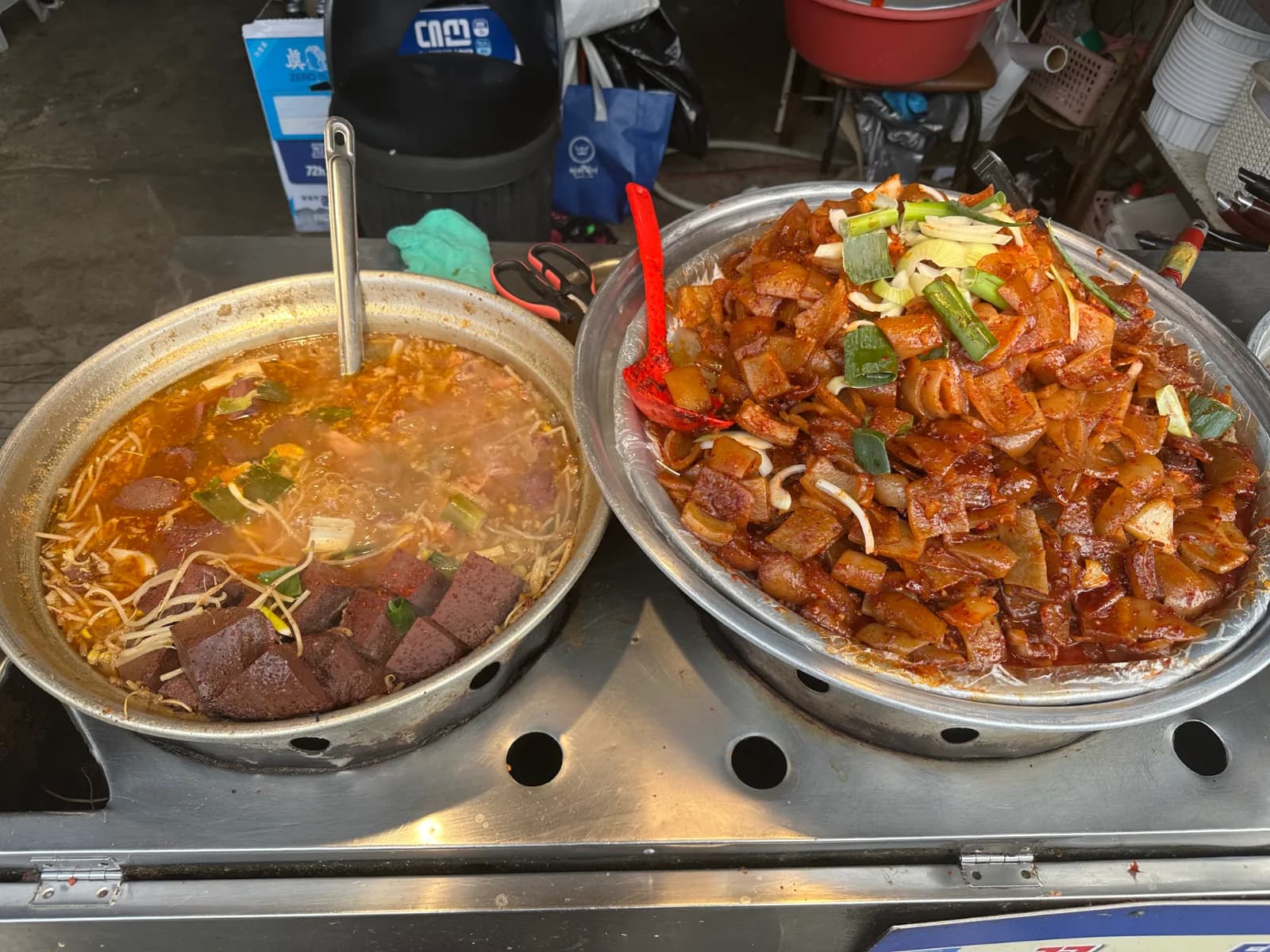
Leaving 자갈치시장(Jagalchi Sijang) and walking toward 해안시장(Haean Sijang), you notice the smells change: a rich broth mingles with the scent of fish, pierced by the sharp aroma of black pepper. This is 선지국밥거리(Seonji Gukbap Geori), the street of rice soup with coagulated blood. Steaming earthenware bowls line the entrance to the alley, while ladles tirelessly scoop up blood curd and meat. The first mouthful is rustic, without delicate presentation or polished flavors. Pepper hits the nose with an oddly honest force. As the hot broth follows that bold first impression down your throat, you understand why this rough-edged taste has stayed here so long.
The alley's beginnings are inseparable from the market's history. In the 1950s, people returning after liberation and refugees from the Korean War helped the market grow into a fish market serving the whole country. Its inner lanes filled with fishermen setting off before dawn, sailors buying bedding and daily necessities, and stallholders. All needed an affordable meal that would keep them going. Blood-curd soup became an enduring part of the alley, and old shops still open side by side, serving flavors honed over decades.
Blood curd had become a soup ingredient much earlier. In the late Joseon period, taverns lined market towns, and soup with rice became an everyday meal for ordinary people. Traders arriving at dawn and sailors returning after a night at sea needed a hot, substantial bowl. Inexpensive yet nutritious, blood curd suited their needs. The same demand brought restorative soup shops to riversides and harbors; this alley continues that long tradition.
Blood curd is also difficult to handle. Even a slight loss of freshness lets its heavy, metallic smell overwhelm the broth. Beef blood is said to be more sensitive in this respect than pig's blood, so soup shops traditionally obtain fresh ingredients every day. To counter a smell that cannot entirely disappear, cooks rely on strong spices, above all black pepper. Its sharpness reaches the nose differently from chili powder, suppressing unwanted odors while giving the broth a weighty character. This flavor is built through a direct, rustic response to an ingredient's limitations, using a single spice rather than elaborate refinement.
The shops still show their open kitchens instead of ornate interiors. They serve generous ladles of blood curd, meat and vegetables, adjusting each bowl with familiar flexibility: meat only for those who cannot eat blood curd, extra curd for those who love it. Finishing a bowl, adding a glass of soju and exchanging a few words with a stranger at the next seat remain part of the alley's everyday scene.
This sturdy, pepper-heavy soup was shaped by people whose working day began before dawn. Its history is one of satisfying hunger honestly with inexpensive ingredients and forceful seasoning, rather than elaborate stock or toppings. What tastes rough to one person may have been a wake-up call and a source of warmth to a sailor leaving early. Following the pepper aroma into the lanes toward Haean Sijang is another way to get to know 부산(Busan).