Food Culture
The Story of Geumjeongsanseong Makgeolli
Gang Dong-ilOfficial Waang editor

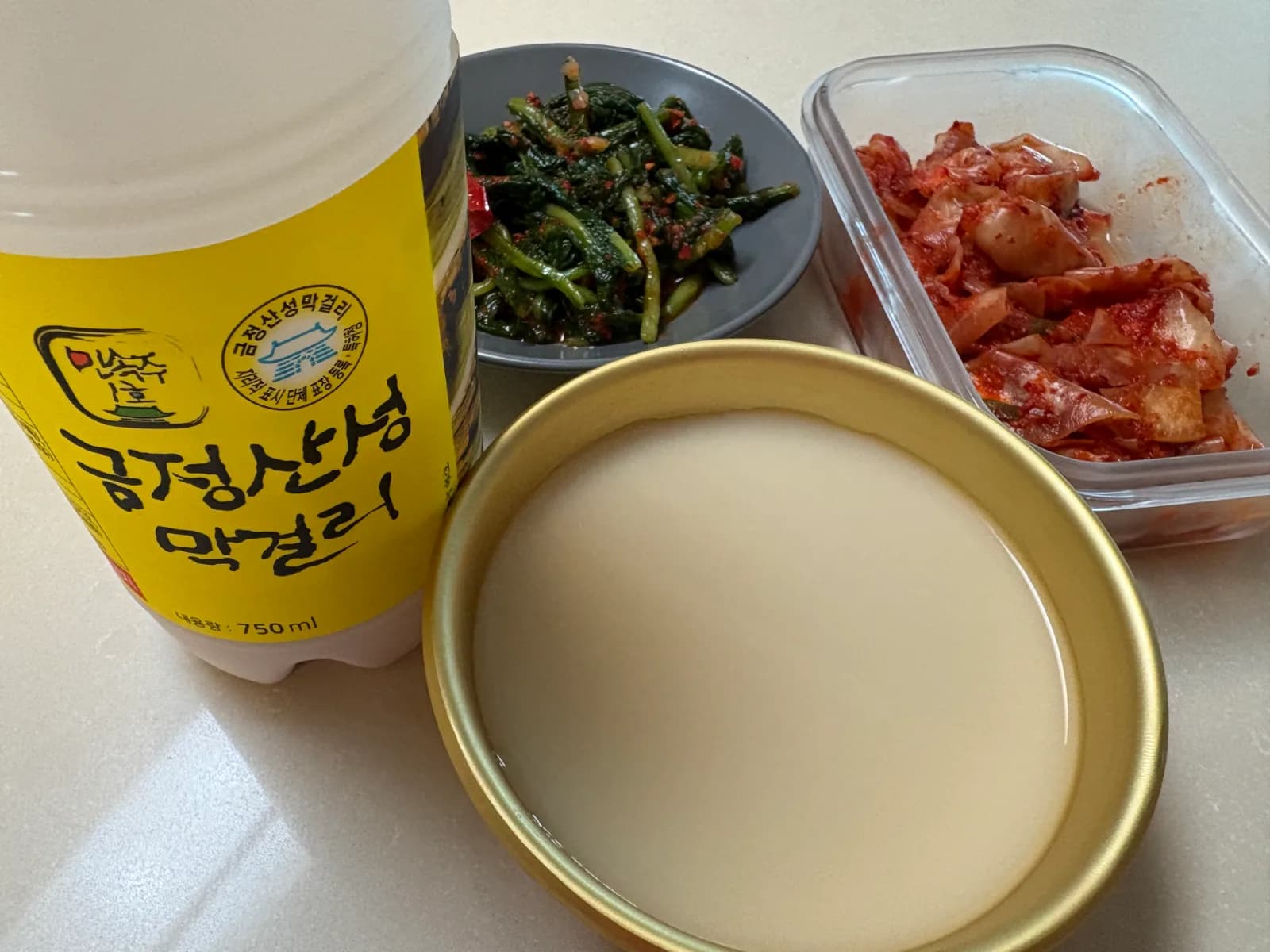
When you follow the hiking trails up Geumjeongsan and reach the Fortress Village, you will often see people sitting on wooden platforms, their bodies soaked with sweat, taking deep swigs of Makgeolli (unrefined rice wine) from large bowls. Pairing it with a plate of Dubujeongol (tofu hot pot) or Pajeon (green onion pancake) to wash away the fatigue of the hike has long been part of the village’s scenery. The milky, thick drink carries the pride of being brewed here with locally made nuruk and water. It is said to have stronger acidity and carbonation and a thicker texture than other makgeolli, giving it a distinctive character that is hard to forget once you acquire a taste for it. There are countless makgeolli brands across Korea, but it is rare for a drink to use the names of both its village and mountain as its trademark. Geumjeongsanseong Makgeolli has a story that makes this fitting.
Its story reaches back to the 32nd year of King Sukjong’s reign in Joseon—in other words, 1706. That year, as Geumjeongsanseong Fortress was being newly built in preparation for Japanese pirate invasions, laborers were conscripted from across the country and gathered at the foot of the mountain. People were already living around the fortress, cultivating slash-and-burn fields, and they had long supported themselves by making nuruk and brewing makgeolli. After a hard day of fortress construction, the laborers quenched their thirst and washed away their fatigue each evening with the village’s makgeolli. It is said that word of the village’s makgeolli spread throughout the country through those who returned home after their labor ended. The cool climate and clear water at the mountain’s 400-meter elevation, combined with nuruk fermented using the traditional method of pressing it underfoot, created a flavor that was difficult to imitate elsewhere.
Yet even this historic drink spent many years unable to emerge proudly into the light of day in the modern era. During the Japanese colonial period and after liberation, the act of brewing alcohol privately itself became subject to regulation, and the people of Fortress Village were no exception. They stepped on nuruk and brewed alcohol according to methods passed down through generations, but legally, it was moonshine. For years, they secretly made the drink deep in the mountains to avoid enforcement officers, and when necessary, hid the jars by burying them in the ground. The flavor and tradition remained unchanged, but the world would not call the drink by a name it could bear openly.
An unexpected connection helped bring the drink into the light. Park Chung-hee, who would later become president, served as commander of the Busan Military Logistics Base during his military career and is said to have often visited Fortress Village, remembering the taste of its makgeolli for many years. Even after becoming president, he sought out the village’s makgeolli whenever he visited Busan. When he learned that it was still subject to moonshine crackdowns, he ordered that it be legalized. In 1979, under Presidential Decree No. 9444, Geumjeongsanseong Makgeolli was finally designated Korea’s No. 1 folk liquor. It was the moment when a drink that had long been brewed in hiding became, overnight, a traditional liquor recognized by the nation. Inspired by this, village residents joined forces to establish the Geumjeongsanseong Traditional Liquor Corporation and began systematically producing the drink together, rather than brewing it separately in their individual homes.
Even today, Geumjeongsanseong Makgeolli maintains its 500-year-old foot-trodden nuruk tradition—the method of making nuruk by pressing and stepping on it directly with one’s feet. The process begins by kneading flour into round, flat nuruk cakes, wrapping them in cloth, and firmly pressing them barefoot to remove air and increase their density. This ancestral wisdom helps naturally occurring molds and yeast settle evenly. Unlike ordinary makgeolli mass-produced by machines, this drink still requires the touch of human hands and feet to be completed. The drink that once quenched the thirst of nameless laborers mobilized to build the fortress has passed through years of prohibition and now appears on drinking tables across the country as one of Busan’s signature traditional liquors. The scene today, with hikers stopping by the village after their trek to drink a bowl of makgeolli, is, when you think about it, not so different from the scene three hundred years ago, when the fortress laborers washed away the day’s toil with makgeolli. When you take a deep drink of Geumjeongsanseong Makgeolli, it holds the labor of those who built the fortress, the years when people had to brew alcohol in secret, and the history of a village that finally earned an honorable name.