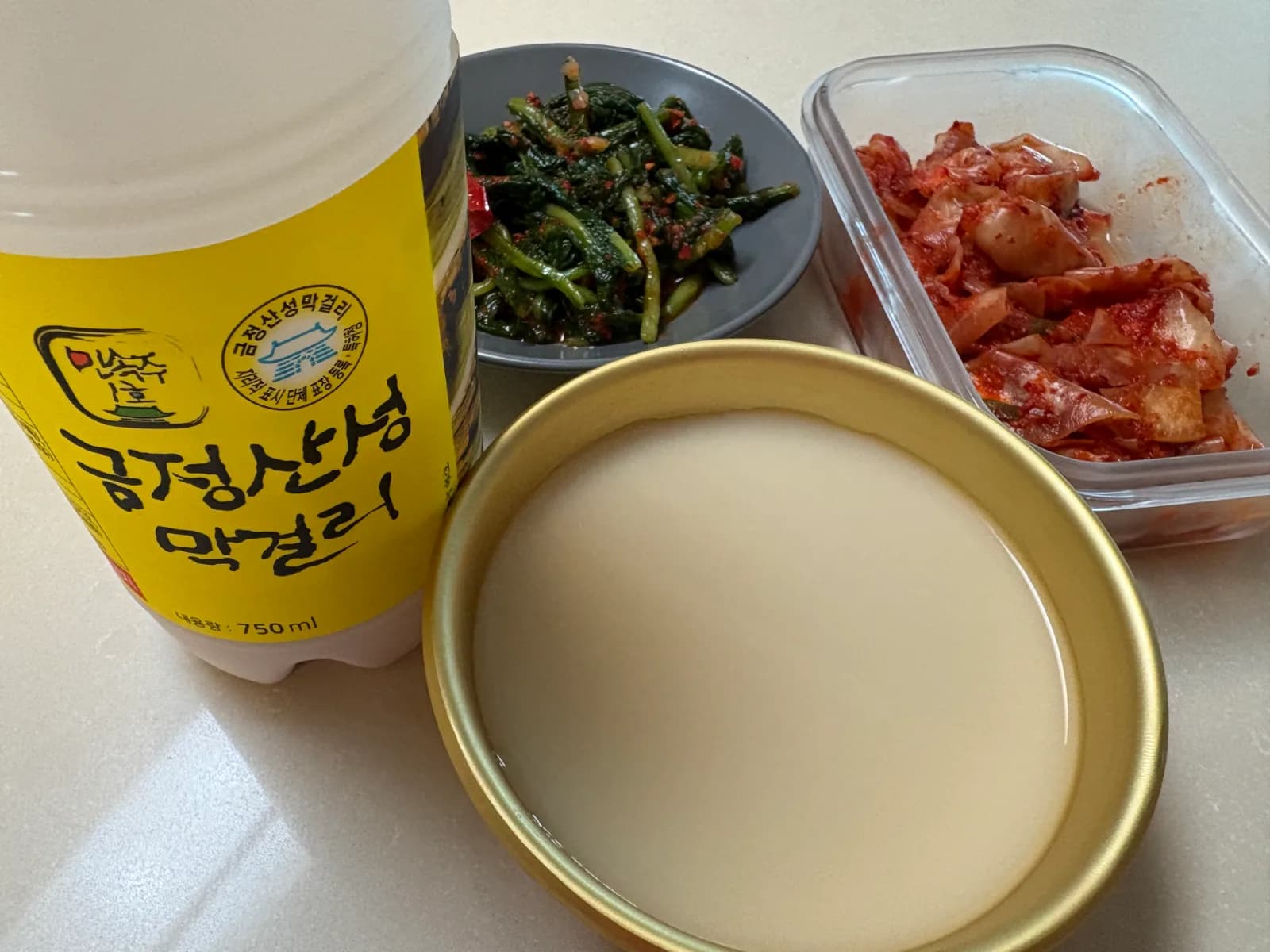
Food in 부산(Busan) - 비빔당면(Bibim Dangmyeon) in the food alleys of 남포동(Nampodong)
남포동(Nampodong)’s 국제시장(Gukje Sijang) and 부평깡통시장(Bupyeong Kkangtong Sijang).
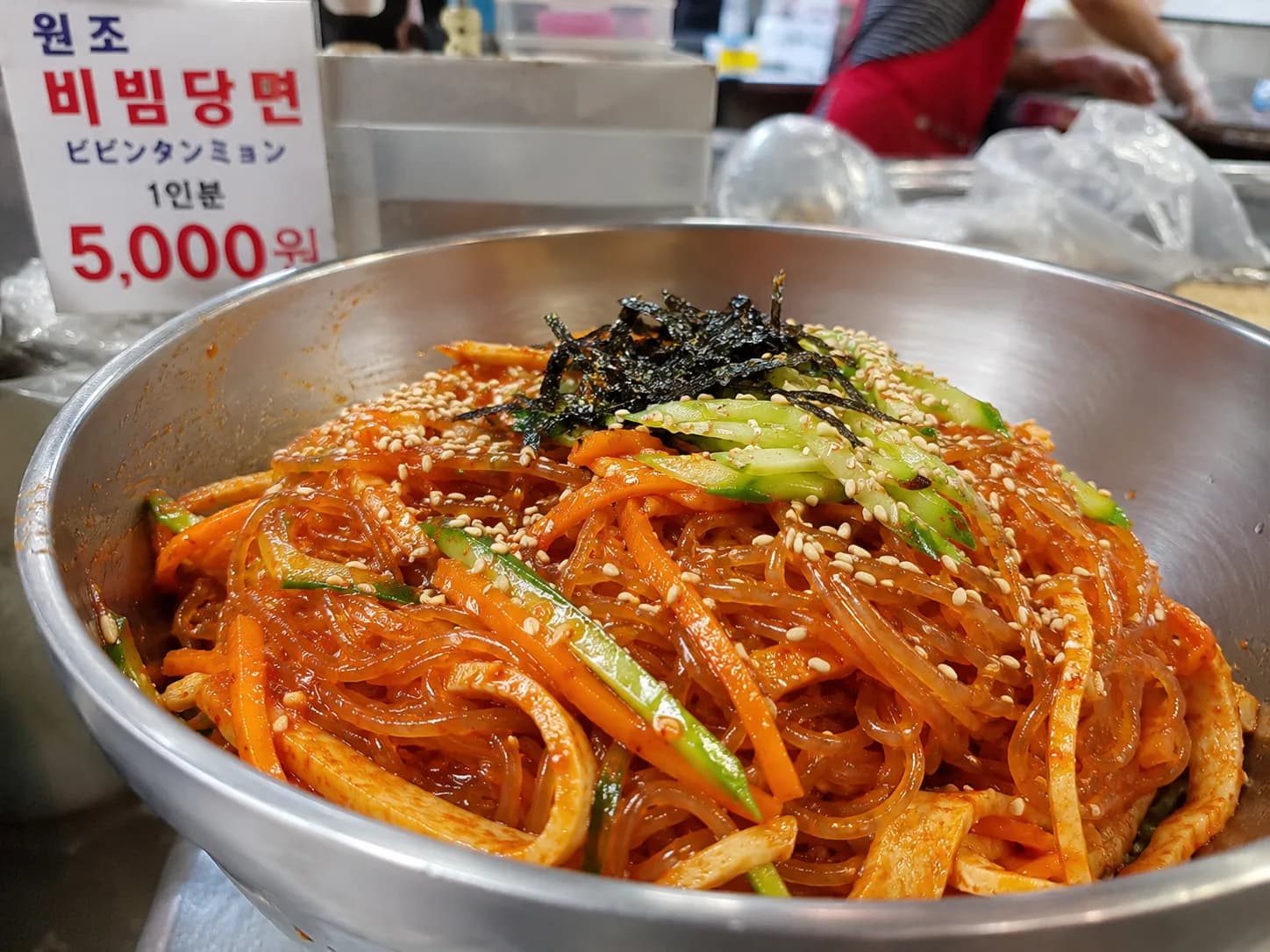
비빔당면(Bibim Dangmyeon) (spicy mixed glass noodles), slurped up after taking a seat at a street stall tucked into the narrow alleys, is a dish that has watched over these streets since long before it ever appeared on glamorous lists of must-visit restaurants.
Pour a sweet-and-spicy sauce over boiled glass noodles, top them with kimchi and spinach, give everything a quick mix, and that’s it. This dish could hardly be more modest in its ingredients or preparation, yet tracing how it became one of 부산(Busan)’s signature alley delicacies leads straight to the history of the markets themselves.
The market streets around Nampodong and 부평동(Bupyeongdong) began taking on their present form during the Korean War.
Refugees from across the country poured into Busan, which had become the temporary capital, and many settled near Busan Port and the old downtown area. With their livelihoods in ruins, the refugees began bringing canned goods and supplies that had made their way out of U.S. military bases, laying them out on street stalls to sell.
It was around this time that the name “Kkangtong Market” took hold, referring to a market that traded canned goods - in other words, “tins.” Gukje Market across the street also began around the same period, growing from a marketplace where goods left behind by departing Japanese residents were sold.
As the two markets expanded side by side, food stalls naturally sprang up in the alleys between them. Merchants who spent all day minding their stalls needed food they could eat quickly without leaving their spots, and local women began carrying out and selling simple snacks. That was the beginning of today’s food alley.
Every dish filling the market alleys carries a story like this, but Bibim Dangmyeon followed the logic of the market more faithfully than most.
Bibim Dangmyeon was born from precisely these circumstances in the market streets. Glass noodles mixed without broth were much simpler to prepare than hot rice soup or stew. Boil the noodles in advance, pour on the sauce, add a few toppings, and they could be served immediately. For merchants who had to stay glued to their stalls, unable to spare a moment from business, there was hardly a better meal.
Glass noodles were also inexpensive for their volume and did not spoil easily, making them ideal market food in lean times. The spicy sauce quickly eased hunger, while tangy kimchi and crisp spinach added freshness to noodles that might otherwise have seemed heavy.
This well-balanced combination, achieved without a single lavish ingredient, was refined by the hands of market women who had to draw the greatest possible flavor from whatever they had on hand.
As the years passed, Bibim Dangmyeon moved beyond being a snack for market merchants and became a delicacy that visitors to Nampodong would seek out on purpose.
From the memories of local families who would each buy a bowl after visiting a nearby bathhouse to its popularity today, when television appearances draw tourists in, the path this dish has traveled overlaps with the path of Nampodong itself.
Even now, among visitors to Kkangtong Market are many who remember coming as children, holding their mothers’ hands, and eating that familiar taste. Passed down across generations, this comforting flavor shows the enduring power of alley food - something that lasts longer than passing trends.
Standing shoulder to shoulder with neighboring stall foods such as Yubu Jeongol (fried tofu pouch hot pot) and eomuk (fish cake), Bibim Dangmyeon still welcomes customers in the heart of Kkangtong Market’s alleys.
The reason this dish remains loved, despite neither requiring an elaborate stock nor meticulous preparation, is simple.
It is a flavor created by people who had to rebuild their lives amid war, doing their best with what they had. When a bowl of Bibim Dangmyeon sits before you, you can almost picture the diligent hands of market people moving between the stalls, working to make it through each day.
If there is a food that stays in your memory for a long time without being flashy, it is probably a taste like this.
Next time you walk through the alleys of Nampodong and find yourself seated at a street stall, you might like to remember that more than seventy years of market-street history are mixed into every bite of those glass noodles.